
Fractional CTO
Need A CTO, Not Another Developer?
Get senior technology leadership for architecture, AI, engineering teams, vendors, delivery, and critical technical decisions without hiring a full-time CTO.
For growing companies that need experienced technical ownership, not another layer of project management.

- One accountable technical owner
- Architecture and build-vs-buy decisions
- Vendor and engineering oversight
- A practical AI roadmap
Sound familiar?
When The Problem Isn’t More Developers
Adding people doesn’t fix a missing decision-maker. These are the situations where a fractional CTO helps.
No technical owner
Important technology decisions are spread across founders, vendors, and developers, and nobody is accountable for the whole picture.
Engineering needs direction
The team can build, but architecture, priorities, standards, or delivery are drifting.
Vendors are driving strategy
You need someone who can challenge estimates, architecture, recommendations, and technical assumptions.
AI changed the roadmap
You need a practical AI strategy tied to operations, architecture, security, and return, not a pile of pilots.
Scope
What I Actually Own
The same responsibilities a full-time CTO would carry, at the level of involvement the company needs.
Technology strategy
Where technology should take the business, what to build, what to buy, and in what order.
Architecture
Systems, data, and integrations designed to hold up as the company grows.
Engineering leadership
Standards, priorities, reviews, and hiring input for internal and outsourced teams.
AI strategy and governance
Where AI actually helps, how it’s supervised, and how it fits your security and data.
Vendor management
Evaluating proposals, challenging estimates, and holding partners to what they promised.
Delivery and technical risk
Keeping projects on track and catching risk before it turns into rework.
Fit
Who this is for
Good fit
- Founder-led businesses with growing technical complexity
- Companies relying heavily on outsourced development
- Organizations between CTOs
- Teams taking on a major modernization or AI initiative
- Businesses where technology decisions carry real operational or financial consequences
Probably not a fit
- You need one developer for a small, isolated task
- It’s an early idea without an operating business yet
- You already have a strong internal CTO
Engagement
Pick the level of involvement you need
Advisory
Executive technical guidance and decision support for leadership.
Embedded
Ongoing CTO ownership across leadership, development, vendors, and roadmap.
Interim
Temporary technical leadership through a transition or transformation.
Sample output
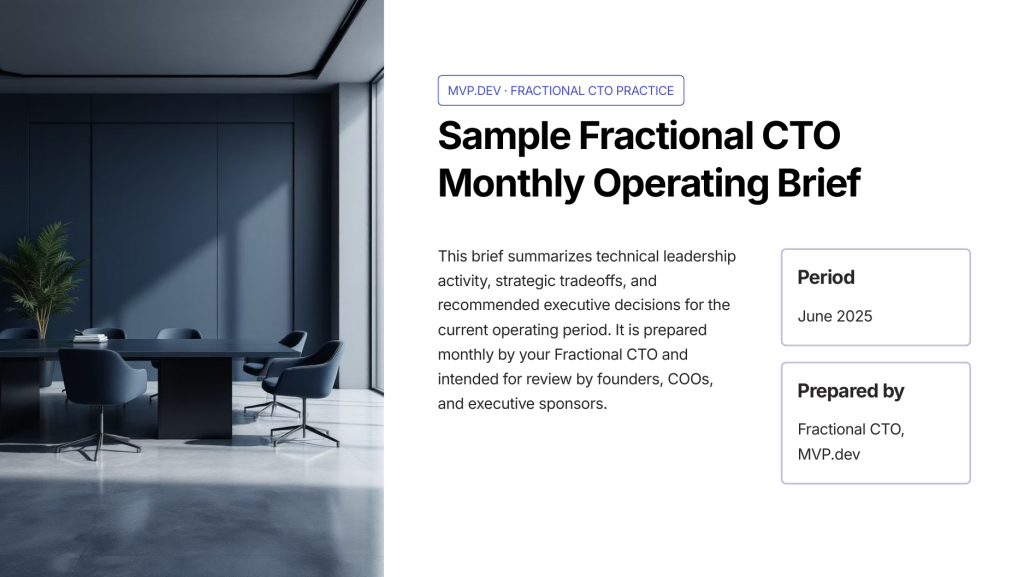
The monthly CTO operating brief
Leadership gets one document each month covering the technical decisions that need their input, vendor and delivery risks, and recommended changes to the roadmap.
FAQ
Common questions
How is a fractional CTO different from hiring a senior developer?
A senior developer builds what they’re asked to build. A CTO decides what should be built, how it should be designed, who should build it, and whether the vendors and team are doing it right.
Is AI the main focus?
No. AI strategy is one part of the role. Most of the job is architecture, engineering direction, vendors, and delivery. AI decisions get made in that context, not on their own.
When does a full-time CTO make more sense?
When technology needs daily executive attention and the company can support the cost of a full-time executive. We compare the two on the fractional vs. full-time CTO page.
Can you work with our existing developers or agency?
Yes. Much of the role is directing and reviewing work done by others, whether that’s an internal team, an outsourced firm, or both.
Get CTO-Level Judgment Before You Need A Full-Time CTO
If technology is becoming too important to manage informally, let’s talk.