AI-NATIVE BUSINESS OPERATING SYSTEMS
Install one AI-native operating system for how your business actually runs.
We design the operating layer connecting your tools, workflows, data, reporting, and supervised AI agents so the business can move faster with less manual drag, real governance, and fewer blind spots.
Best fit for operations-heavy companies where reporting, routing, and decision-making are spread across too many systems and too much manual work.
Need the plain-English version first? Read: What Is a Business Operating System?
Start here when
- Leadership needs one operating view across teams, systems, and reporting
- Workflow complexity is outgrowing spreadsheets and disconnected SaaS tools
- You know the business needs system design, not just one isolated automation
This is probably not the first step when
- You only need one simple automation or one small internal app
- The company has not yet reached meaningful operational complexity
- An existing technical leader already owns systems architecture, governance, and reporting design well
What this engagement solves
Sharper systems. Better execution. Less operational drag.
Disconnected tools
Important operational data is trapped in separate tools and spreadsheets that never reconcile cleanly.
Manual reporting
Leadership waits on human-built reports instead of seeing live operational signal.
Fragile workflows
Key processes depend on tribal knowledge, one-off workarounds, and manual follow-up.
Common examples
Where a business operating system usually shows up first.
Client delivery operations
Connect CRM, delivery handoffs, status reporting, and margin visibility so teams stop running the business through side spreadsheets.
Approvals and routing
Normalize intake, approvals, escalations, and ownership across sales, ops, finance, and service teams.
Leadership reporting
Replace stitched-together updates with a cleaner operating view tied to the real work underneath.
What you get
What you get
Workflow architecture
A clear operating map of your core workflows, decision points, and bottlenecks.
Systems integration plan
A practical plan for connecting the stack you have with the stack you actually need.
Automation blueprint
A prioritized view of where AI and automation create leverage first.
Visibility layer
Dashboards and reporting patterns built around the truth of the business, not spreadsheet theater.
This is not just…
More software, another dashboard, or a loose automation project.
- Not just buying another tool and hoping teams adapt
- Not just adding AI summaries to broken reporting inputs
- Not just shipping an app without fixing the workflow and governance around it
What this looks like in practice
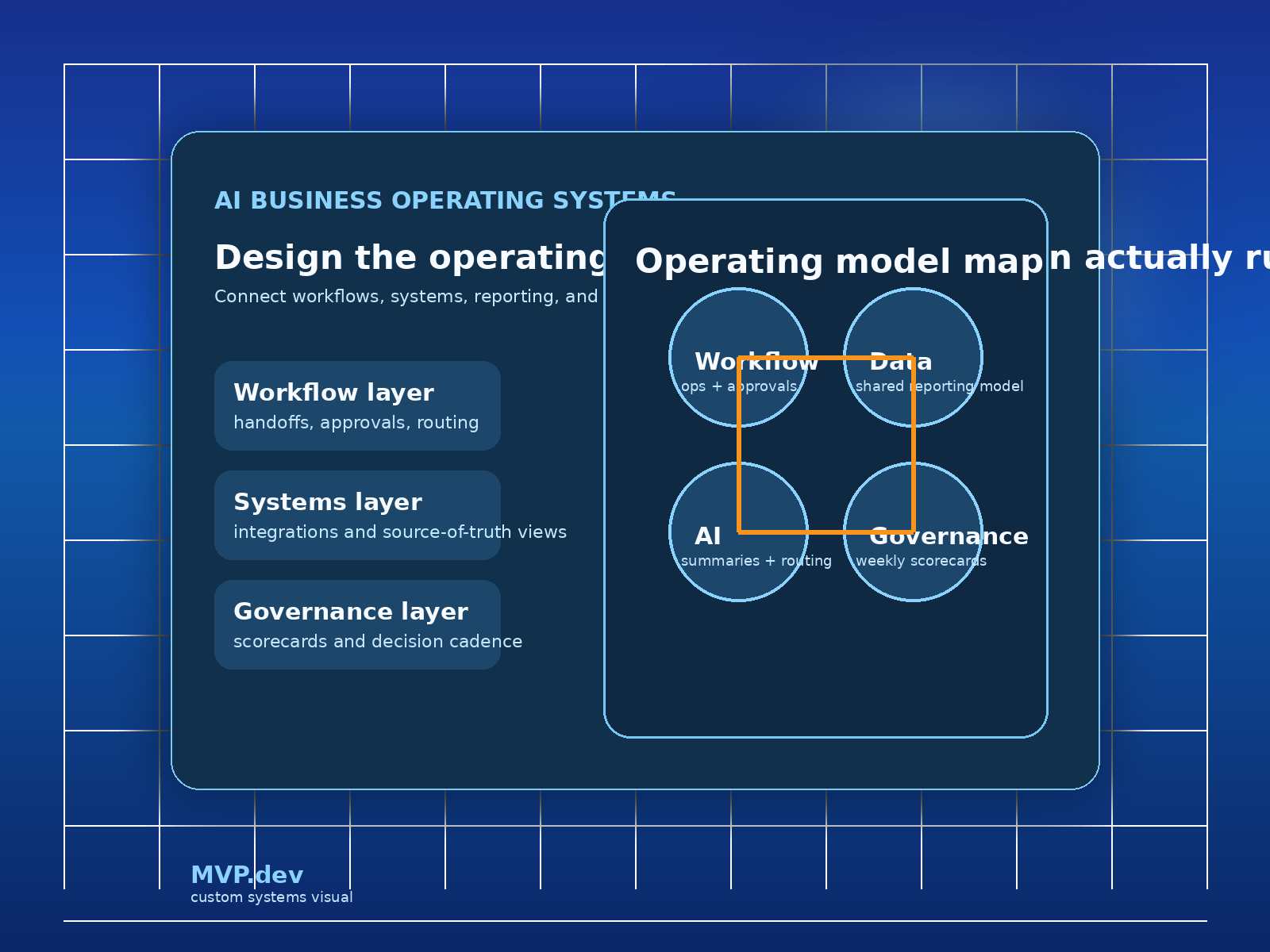
Your operating system should connect work, systems, and decisions.
Most companies have these parts already. The problem is that they do not run as one system. This engagement designs the layer that makes them work together.
Requests and handoffs
Leads, client work, approvals, support requests, vendor updates, and internal tasks.
Rules and routing
Ownership, sequencing, SLAs, escalations, and the steps that define how work moves.
Connected systems layer
The integrations, data model, and internal tooling that keep workflows synchronized.
Reporting and visibility
Live dashboards, client updates, team alerts, and executive reporting built from cleaner inputs.
Leadership control
Decision rights, change control, vendor oversight, and AI usage rules that prevent drift.

Sample PDF roadmap
Review a polished operating-system roadmap before you decide how to move.
This Gamma-designed roadmap sample shows the kind of phased output leadership gets after the operating system is diagnosed properly: what to stabilize, what to connect, and where automation should come later.
Where it shows up first
One operating system changed how leadership, ops, and delivery saw the business.
A services firm came in with reporting split across team-owned spreadsheets, disconnected tools, and too much context trapped in individuals.
- Mapped the real operating flow across delivery, finance, and client reporting
- Connected the retained stack into one normalized reporting layer
- Created a leadership dashboard with fewer manual inputs and clearer weekly decisions
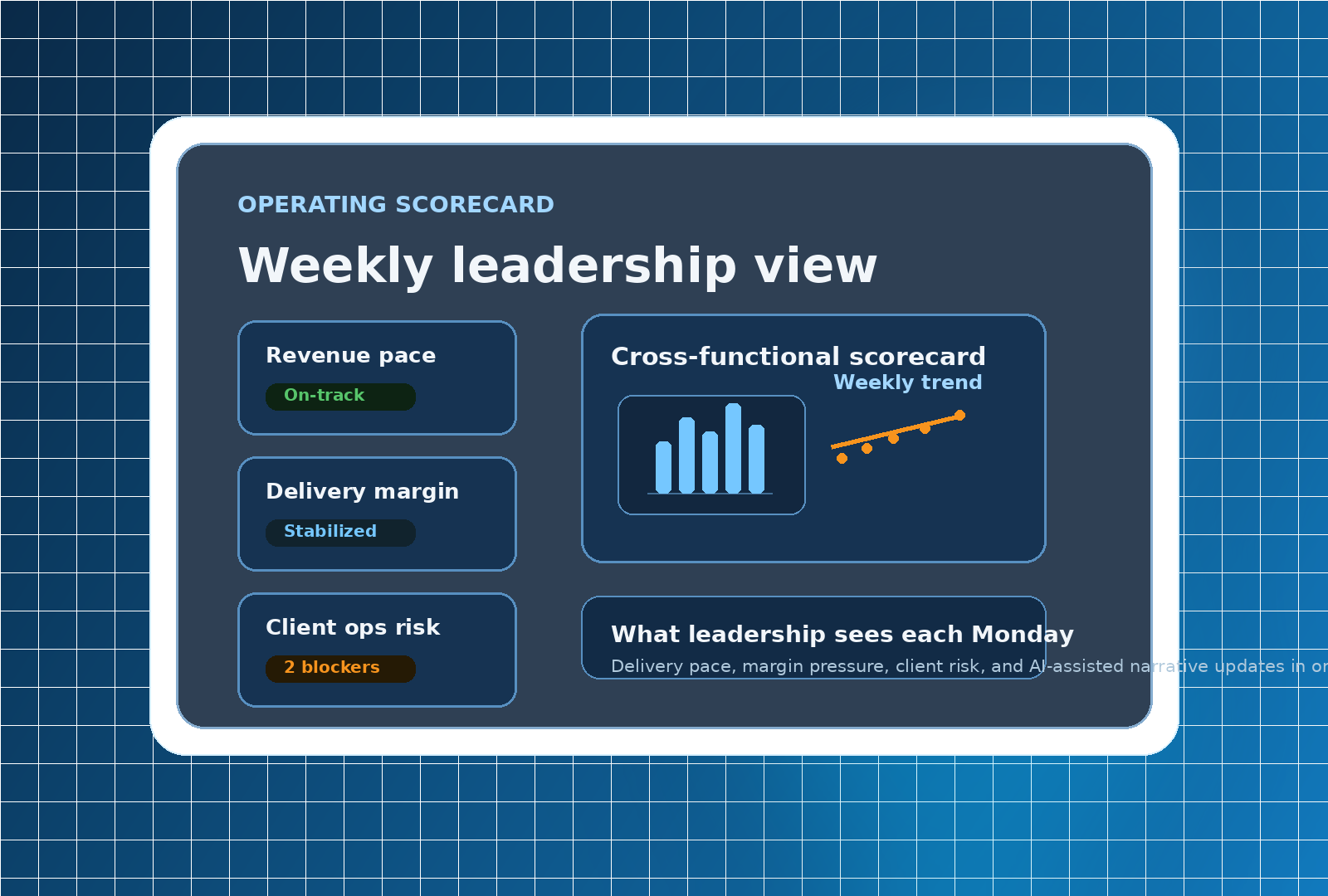
Artifact example
Leadership sees one operating scorecard instead of stitched-together weekly updates
The business operating system is only real when reporting, workflow state, and leadership decisions all run through the same layer.
How it works
A structured engagement built around real operating leverage.
Assess
Map systems, people, and workflow dependencies.
Design
Define the operating model, integrations, and governance.
Implement
Build the operating layer and roll it out in focused sprints.
FAQ
Common questions about AI business operating systems.
What is an AI business operating system?
It is the operating layer that connects workflows, tools, data, reporting, and governance, then adds AI and automation where they improve speed and visibility.
How is this different from buying more software?
The goal is not to add more tools. The goal is to make the business run through a clearer operating model with better integrations, ownership, and reporting.
When should a company start here?
Start here when the business has real workflow complexity and needs a stronger system design, not just one isolated automation.
Do you implement the system too?
Yes. We can assess, design, implement, and help govern the operating system instead of stopping at recommendations.
Next step
Install the operating system before you automate at scale.
Start with an audit so you can see where the current system breaks, what to keep, and what to build next.