COMPARISON GUIDE
AI OS Audit vs General Tech Audit
A general tech audit tells you what is technically wrong. An AI operating system audit shows where operational drag is coming from, what to fix first, and how AI, automation, systems cleanup, and leadership changes fit together.
See the outputs before you book.
Operational friction
Systems diagnosis
Priority roadmap
How they differ
General tech audit
- Focuses on code, infrastructure, security, or tooling posture
- Useful when the main concern is technical debt or architecture quality
- Usually stops at technical findings
- May not connect findings to operational impact
AI OS Audit
- Focuses on workflows, handoffs, reporting drag, tool sprawl, and decision bottlenecks
- Useful when the business feels slow, fragmented, or hard to scale
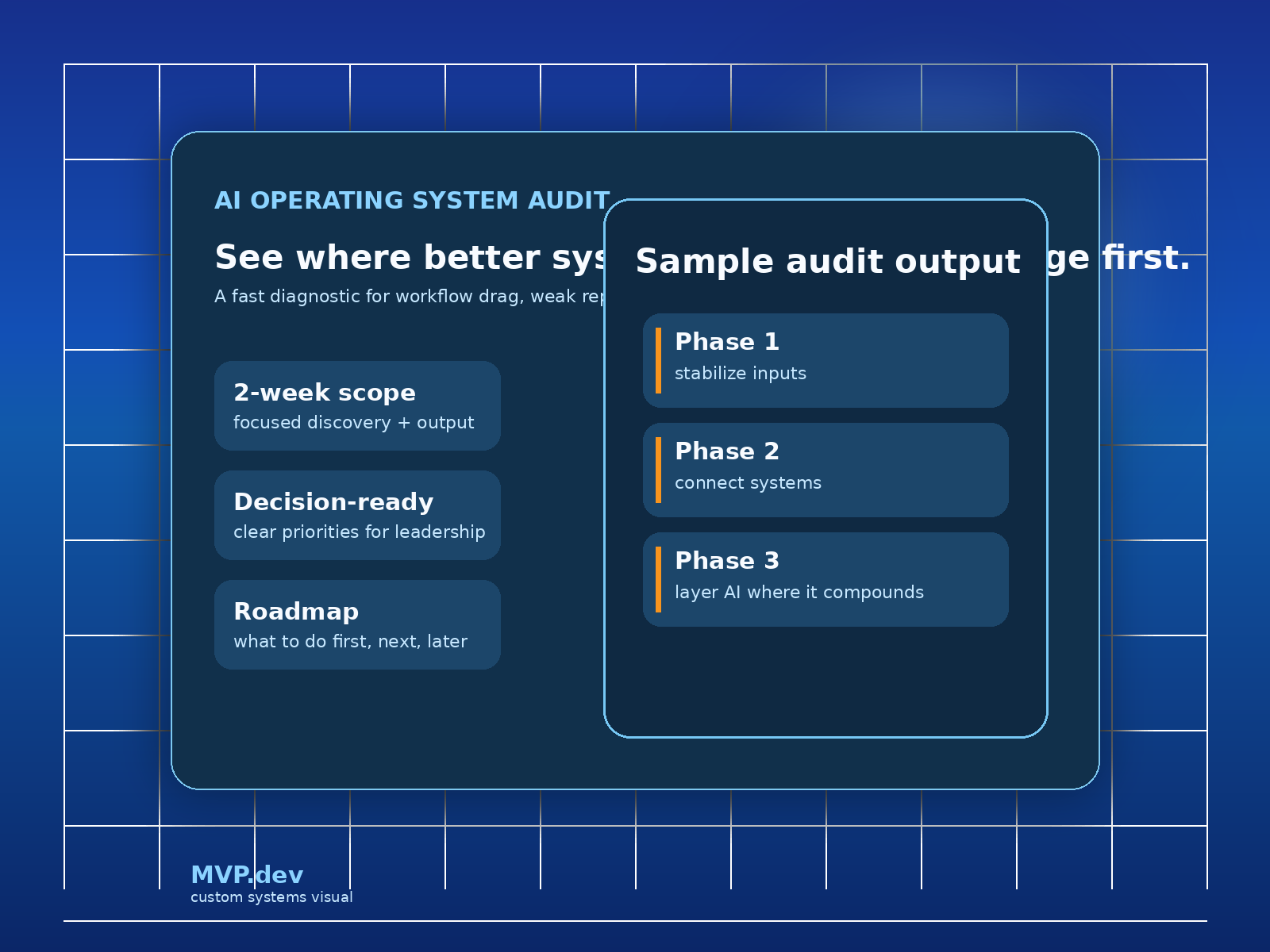
- Ends with a phased operating roadmap
- Connects systems issues to measurable leadership and execution pain
Choose an AI OS Audit when the real problem is operational
Reporting is slow
Leadership waits too long for clean reporting and decisions get made on stale or partial information.
Teams work across disconnected tools
Different functions are operating in separate systems with weak handoffs and manual reconciliation.
AI feels bolted on
There are experiments and isolated automations, but no operating model tying them to the business.
What you get instead of a generic findings list
An AI OS Audit gives you a friction map, a leadership-facing executive brief, a phased roadmap, and a clear view of where automation or technical leadership will create the most leverage first.