
COMPARISON GUIDE
Startup MVP vs Full Product Build
Build an MVP when the goal is to test a risky assumption, validate demand, or learn from early users without overcommitting. Build the fuller product when the market, workflow, and commercial model are already clear enough that execution speed matters more than discovery.
See how we scope early-stage delivery before a larger build.
Validate first
Protect capital
Scale with evidence
The decision rule
If the team is still learning what the market wants, which workflow really matters, or whether users will adopt the product at all, an MVP is the right move. If the demand, user path, and commercial model are already proven, stretching the work into an artificial MVP can slow the business down instead of helping it learn.
Start with an MVP
- Best when the product thesis still needs evidence
- Keeps scope tight around the riskiest assumption
- Preserves capital and team focus
- Risk: weak MVP discipline turns into an underfunded full build
Go to the fuller build
- Best when the workflow, buyer, and value path are already clear
- Useful when speed to operational rollout matters more than discovery
- Supports broader adoption and internal readiness
- Risk: overbuilding before the signal is real burns time and budget
Choose the MVP route when these signals are present
The commercial risk is still high
You still need to prove who buys, what they use, and whether the workflow is painful enough to justify the product.
The team is arguing about scope
When every feature sounds essential, an MVP forces the discipline to test what actually matters first.
The core business cannot afford a large distraction
An MVP protects the main operation while the new offer earns the right to expand.
What usually works best
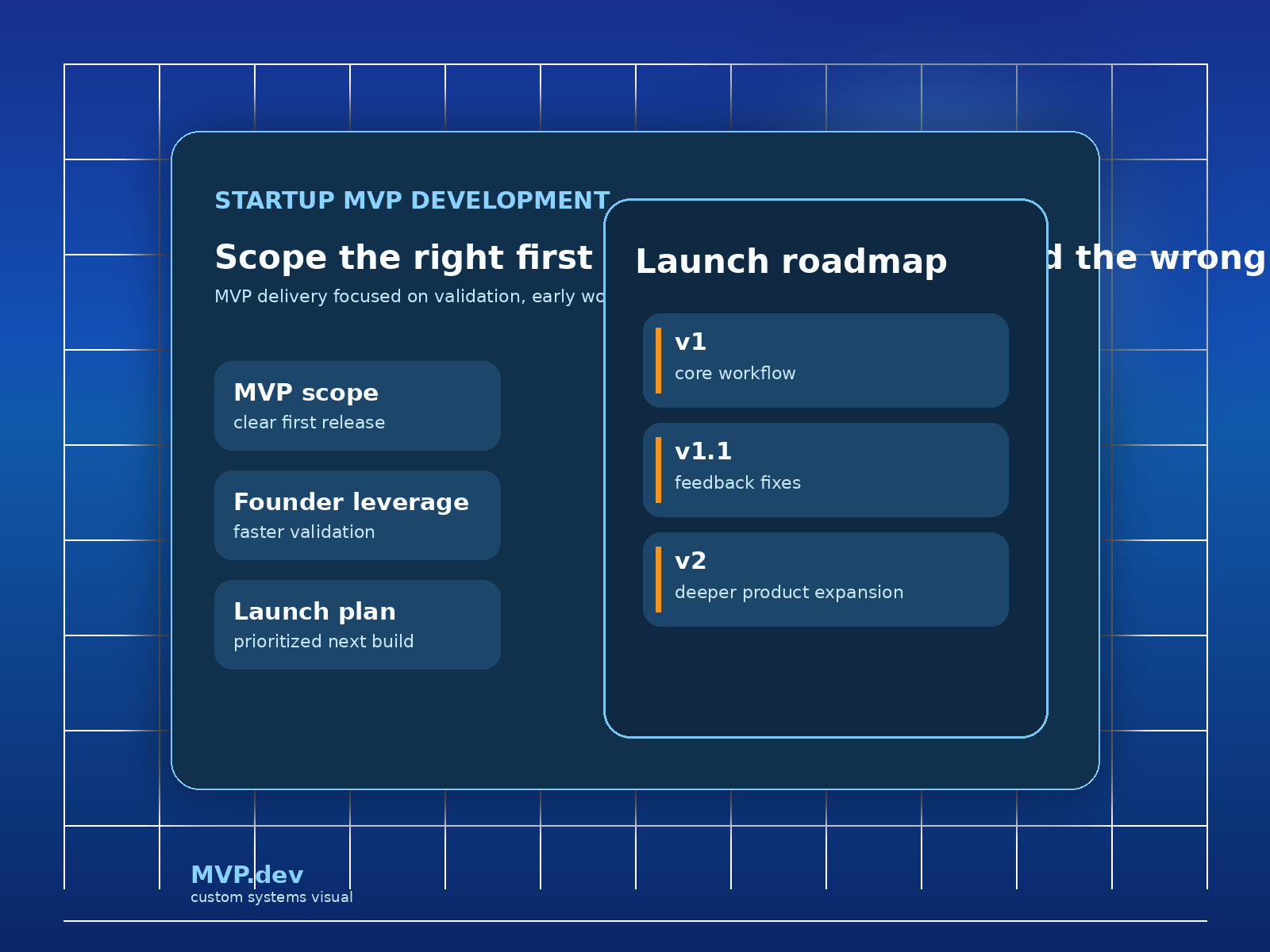
The strongest path is often staged: use a disciplined MVP to prove the core behavior, then expand into the fuller product only after the team has evidence, user feedback, and clearer delivery priorities.