
COMPARISON GUIDE
Custom Internal Tools vs Off-the-Shelf SaaS
Buy off-the-shelf software when the workflow is standard and the process can adapt to the tool. Build custom internal tools when the workflow is core, unique, high-friction, or expensive to force into generic SaaS.
Estimate the ROI of fixing the workflow first.
Build vs buy
Workflow fit
Operational leverage
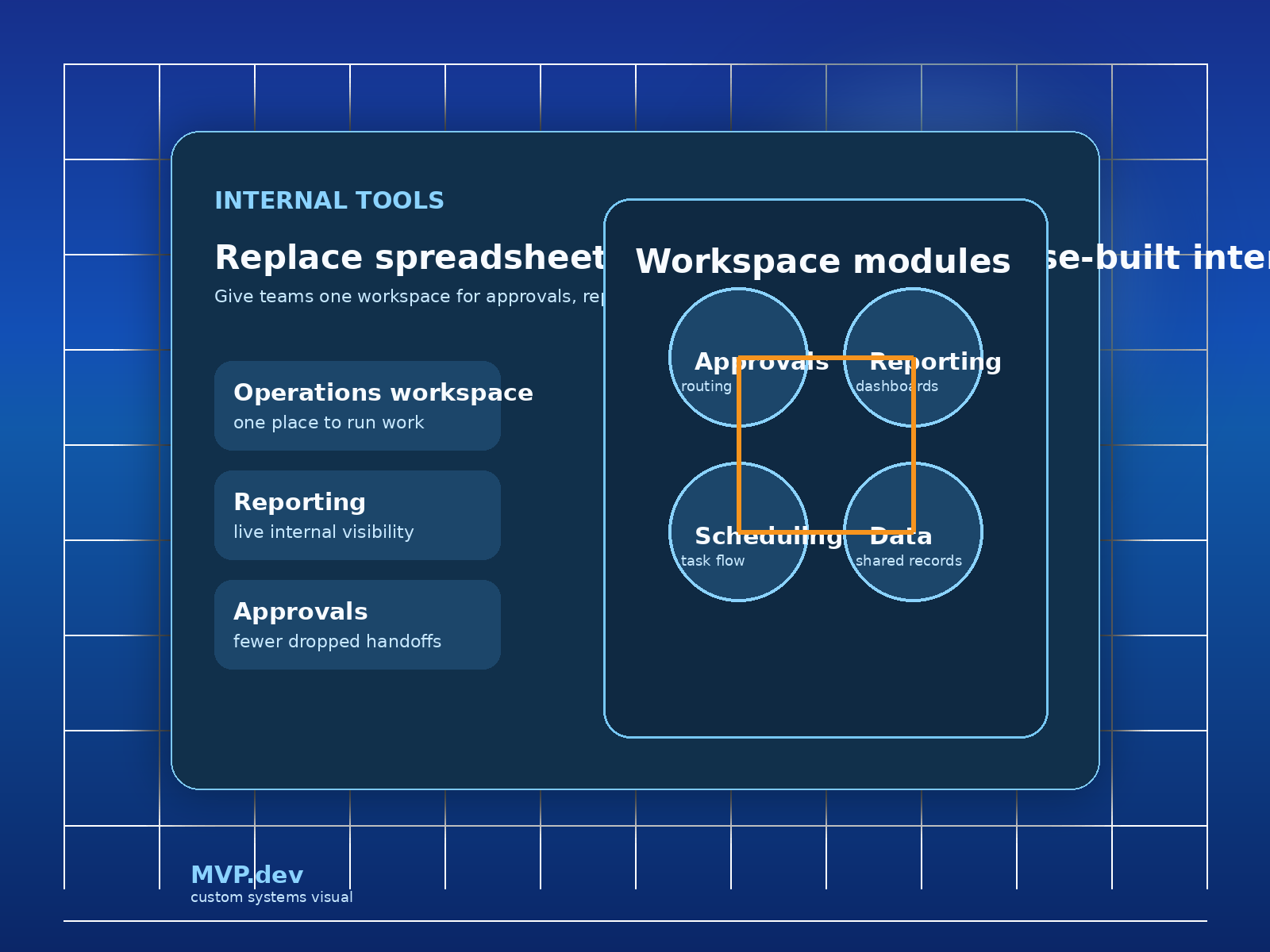
The decision rule
Use SaaS when the process is common, the team can adopt the tool without major friction, and the economics are acceptable. Build an internal tool when the workflow is central to how the company operates, the process cuts across multiple systems, or the cost of forcing generic software into the operation is already high.
Off-the-shelf SaaS
- Faster to adopt
- Lower upfront build effort
- Strong fit for standard workflows
- Better when process flexibility exists
- Risk: teams bend operations around the tool
Custom internal tools
- Designed around your real workflow
- Connect multiple systems cleanly
- Can remove manual handoffs and spreadsheet layers
- Best when friction already has a measurable cost
- Risk: should be scoped carefully, not overbuilt
Build custom when these signals are present
The process is unique
Your approvals, routing, reporting, or service delivery flow does not fit cleanly into standard software.
Teams are stitching tools together manually
The current workflow depends on exports, spreadsheets, Slack messages, and human coordination to stay moving.
The cost of friction is already visible
Slow handoffs, errors, duplicate work, or reporting lag are consuming enough time that a focused internal tool is justified.
What usually works best
Most companies should not build everything from scratch. The better pattern is often a hybrid: keep commodity SaaS where it works, and build the thin internal layer that connects systems, removes friction, and reflects the workflow that actually drives the business.